How to Have a Successful Low Buy Year
A low-buy year is really needed with everything going on in the world.
After reading The Psychology of Money and The Art of Spending Money by Morgan Housel, I realized that much of our spending is driven by emotion rather than necessity.
In fact, the things we hoard and the money we spend trying to keep up with friends or neighbors rarely add real value to our lives. More often, they go to waste, clutter our homes, and don’t make us any happier.
Money can’t fill an emotional void. What it can do is buy freedom in the future: the freedom to choose when and how we work, and the freedom to spend time with our children when we want to.
In this post, I share practical tips for a low-buy year. Many of these are habits I introduced in 2025, and I plan to continue them in 2026.
What is a low buy year?
A low-buy year is about focusing on intentional spending. It is a way to put your money and energy on what really matters and let go of expenses that are not necessary and that do not align with your goals.
As a result, it is a great way to save more money, break bad spending habits, appreciate and use what you already have, and reduce clutter and waste.
It’s not about perfection, it’s about doing better. Making small changes every single day, which by the end of the year, will bring you great results.
Low buy vs no spend
A no-spend year is much more restrictive than a low-buy year. With a no-spend year, you are only allowed to spend money on essential expenses such as food, rent, transportation, and healthcare.
With a low-buy year, the rules are more flexible. You can still spend money on things you enjoy, but you do so more intentionally and with clear limits.
The goal of both approaches is similar. They help you move closer to your financial goals while also changing your mindset around shopping.
Both challenges encourage you to think carefully before making a purchase and to pause instead of buying something immediately. Learning to wait before spending money is often the first step toward breaking the habit of impulse buying.
How to structure a low-buy year
The structure of the low-buy year is simple. You need to define the sum you want to save, the sum you need to spend on expenses, and the sum you want to spend as you please.
That said, your low-buy year will not look exactly like mine. We have different goals and priorities.
But some steps in preparation for the low-buy year remain the same. I will share them below.
Review your spending data
It is important to always start with data.
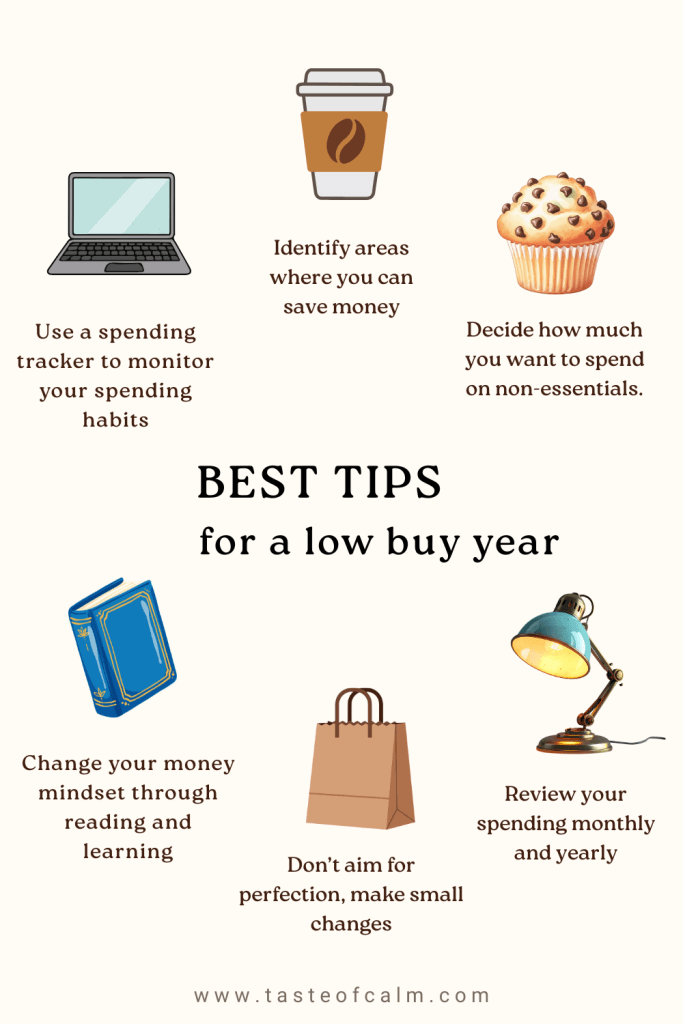
I use a spending tracker and keep track of my monthly expenses. It’s not something I do every single month, but I make sure to do it when I am preparing for the low-buy year.
Then, I divide the data into necessities like bills, equipment, food, etc., and non-necessities like treats, going out, presents, subscriptions, and so on.
This data gives me a clear picture of my monthly expenses and how much money I spend on non-necessities.
It also enables me to determine where I can save. Sometimes, I get surprised by how much money I spend on unplanned purchases, treats for kids, or snacks I don’t really want to eat!
Identify areas where you can save
After collecting and reviewing the data, it is now time to put an action plan together.
For me, that means pinpointing areas where I should be more careful (putting a limit on kids’ treats, travel plans, or snacks I buy).
Just by raising awareness on how much money is wasted this way, I get motivated to save.
Define clear guidelines for a low-buy year
A low-buy year does not mean stopping all spending. Instead, it means becoming more intentional about what you buy and why you buy it.
Before starting a low-buy year, it helps to define a few simple rules. These rules will guide your decisions and make it easier to stay consistent.
1. Only replace what you truly need
If something breaks or runs out, you can replace it. But avoid buying backups or stocking up unnecessarily.
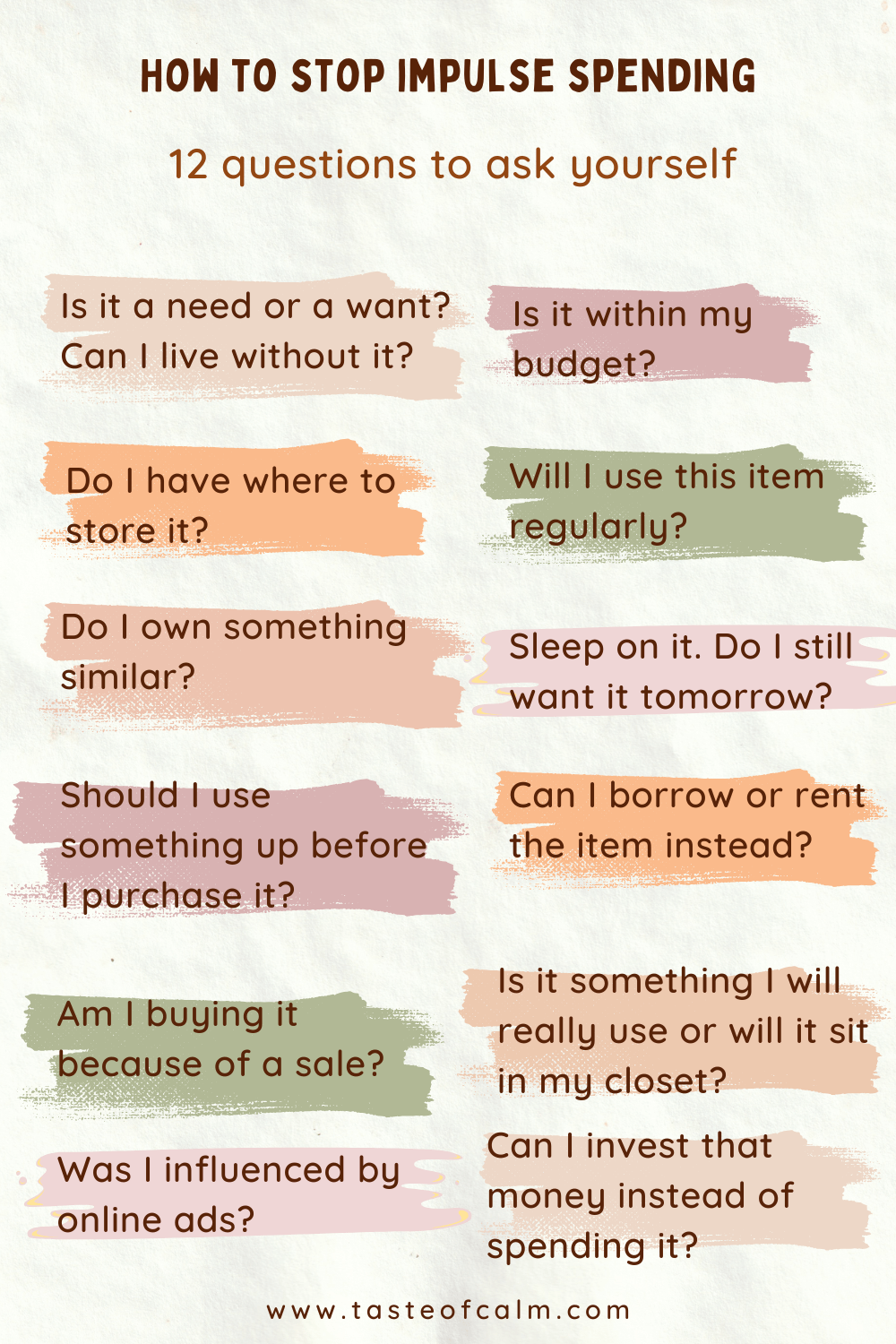
2. Avoid impulse purchases
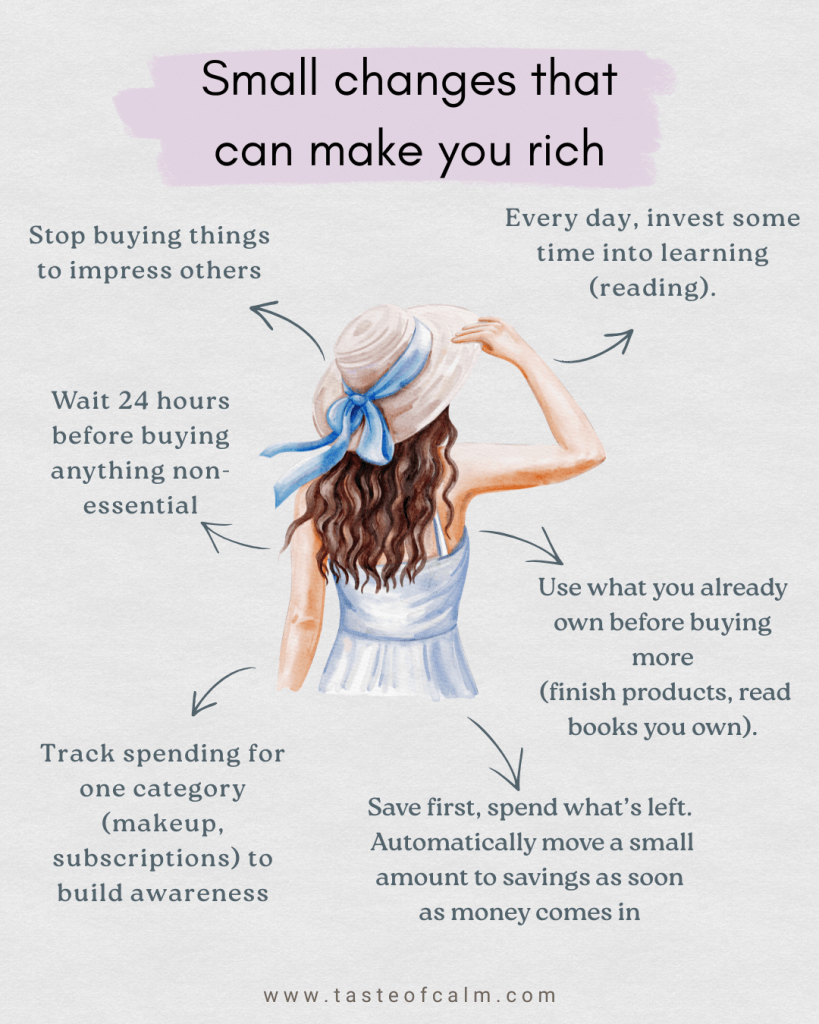
When you feel the urge to buy something, wait a few days before making the decision. Most of the time, the desire to buy will pass.
3. Set limits for non-essential spending
Decide in advance what you are still allowed to buy. This could include books, skincare, clothing, or hobbies, but only within clear limits.
4. Use what you already own
A low-buy year is a good opportunity to use the things you already have. Finish products, wear the clothes in your closet, and use the items that often go unnoticed.
5. Track your spending
Keeping a simple record of your purchases can help you stay aware of your habits and see your progress over time.
Work on your mindset change
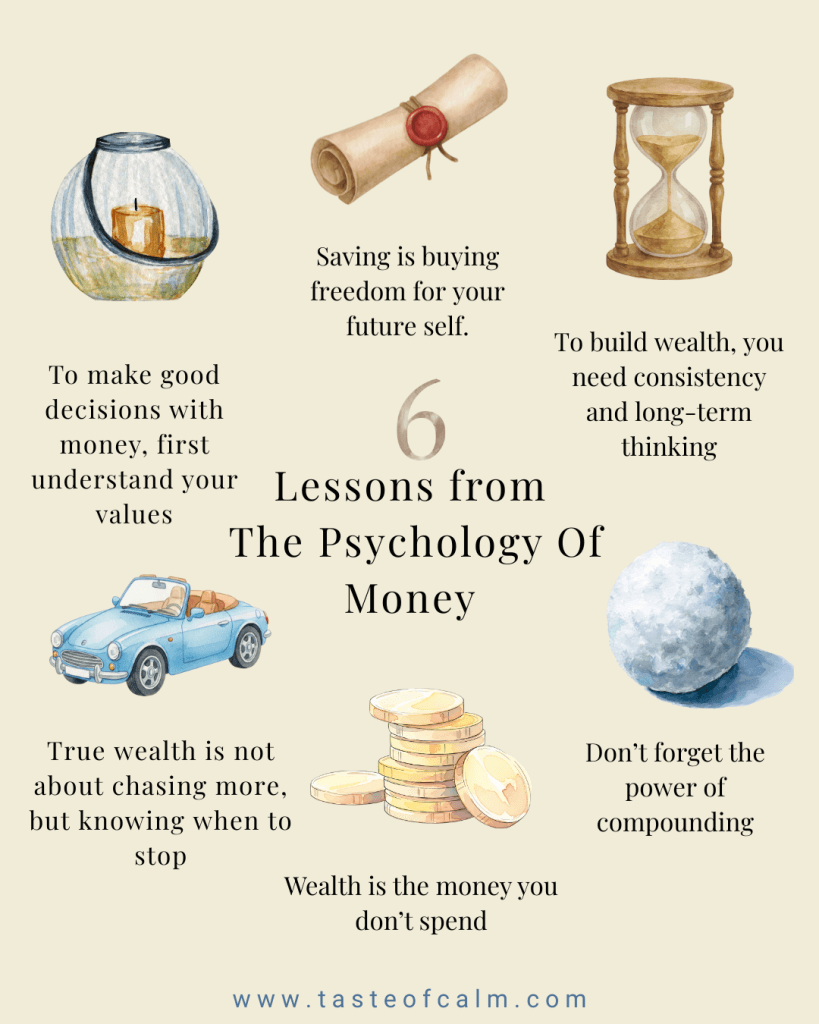
For me, reading inspiring books or books that help me understand why I spend money the way I do motivates me to change my daily habits.
This is key to having a low buy year: Changing your mindset for the better and stopping the emotional or impulsive spending habits.
Working on yourself and making sure you spend time on personal development will not only help you save money but also lead a much more fulfilling life.
Don’t aim for perfection
The goal of the low spend year is not to be perfect. The goal is to change your mindset around money, build better spending habits, and learn how to save without feeling constrained.
For me, just realizing how much money goes to waste and realizing how much money I could have saved if I invested it instead, gives me enough motivation to start paying attention to things I decide to buy.
Review your results monthly and yearly
I don’t do this every month, but monitoring expenses monthly and yearly is a great way to keep yourself in check all year round.
Because we all start enthusiastically with great plans, but as months go by, so does our desire to save. And little by little, we give in and start spending way more than we intended.
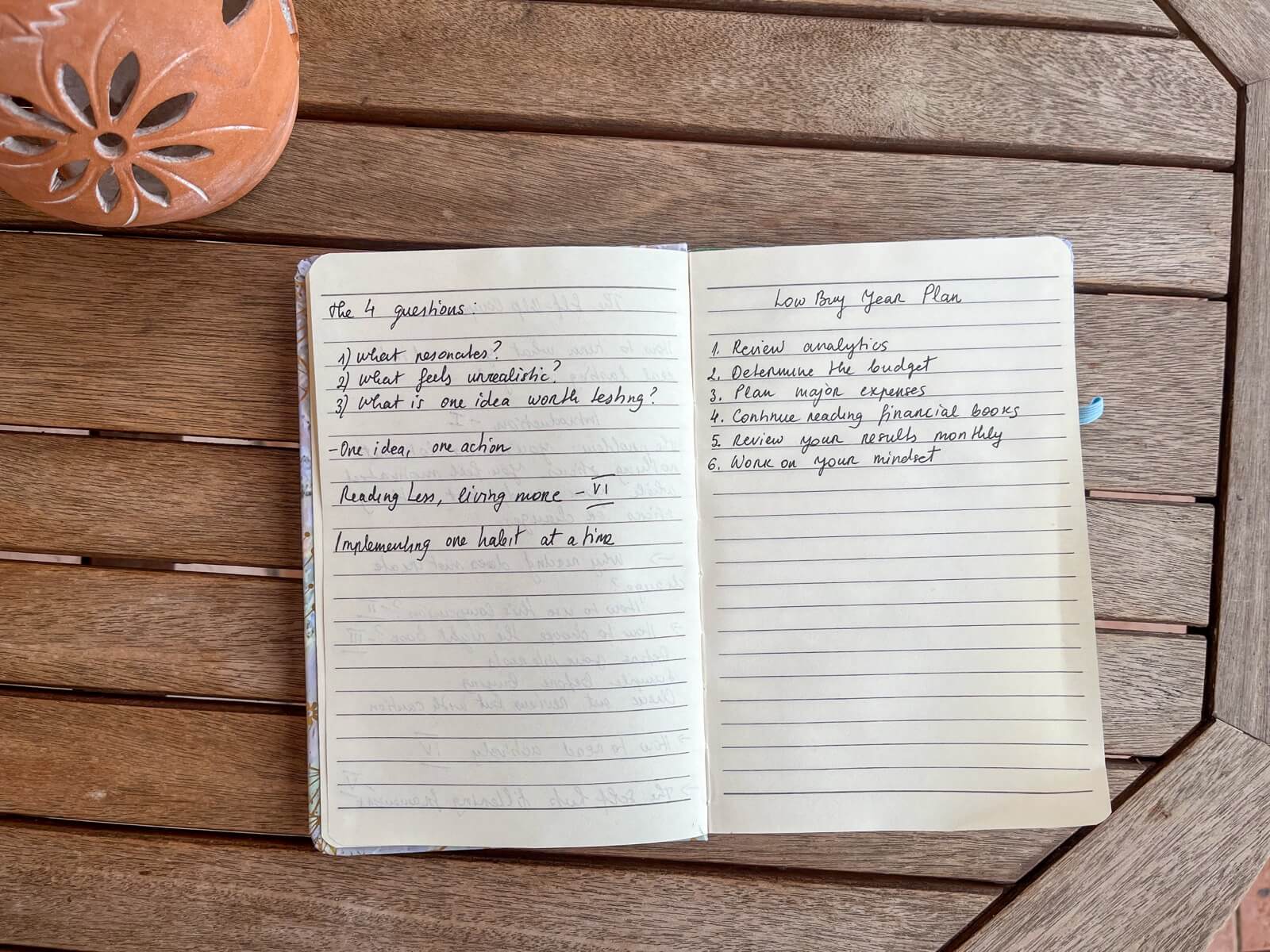
Having a Spending Sheet in your journal is life-saving. It clearly shows oscillations between months and keeps you on track.
At the end of the year, I do my end-of-year journaling. At this point, I review all spending data for the year and see if I need to change something for next year.
What I plan to do for my low-buy year
My low-buy year will focus on keeping unplanned purchases as low as possible. I don’t want to go out and buy things out of boredom.
I want to buy things I really need and want. So here are my guidelines for this year:
- Avoid unplanned purchases in-store (both food, clothes, and books)
- Avoid online shopping whenever possible and adding products into the cart that I had no intention of purchasing
- Be more mindful of the electricity I use and save when possible
- Reduce takeout food by planning my meals in advance
- Reduce food waste by making sure to only buy what I need
- Avoid buying beauty products until I use the ones I have
- Actually using clothes I already have, books I bought but haven’t read, and makeup I haven’t used up
- Reviewing all the monthly subscriptions I have
Final thoughts
“Use money to gain control over your time, because not having control of your time is such a powerful and universal drag on happiness. The ability to do what you want, when you want, with who you want, for as long as you want to, pays the highest dividend that exists in finance.” Morgan Housel
The key to having a low-buy year is changing your mindset around money and possessions.
Once you stop valuing material things and recognize that many purchases are made to impress others, it is much easier to resist shopping.
A low-buy year is not really about restricting yourself or cutting out all spending. It is about becoming more aware of your habits and making more thoughtful choices.
When you slow down and question your purchases, you often realize that many things you once wanted are not actually necessary.
Over time, this shift in mindset becomes more valuable than the money you save. You learn to appreciate what you already have, spend more intentionally, and focus on the things that truly add value to your life.
Even if you do not follow a low-buy year perfectly, the experience can still change the way you think about money and consumption long after the year is over.
Related posts
How to save money: Simple habits that work
Book review: The Psychology of Money by Morgan Housel