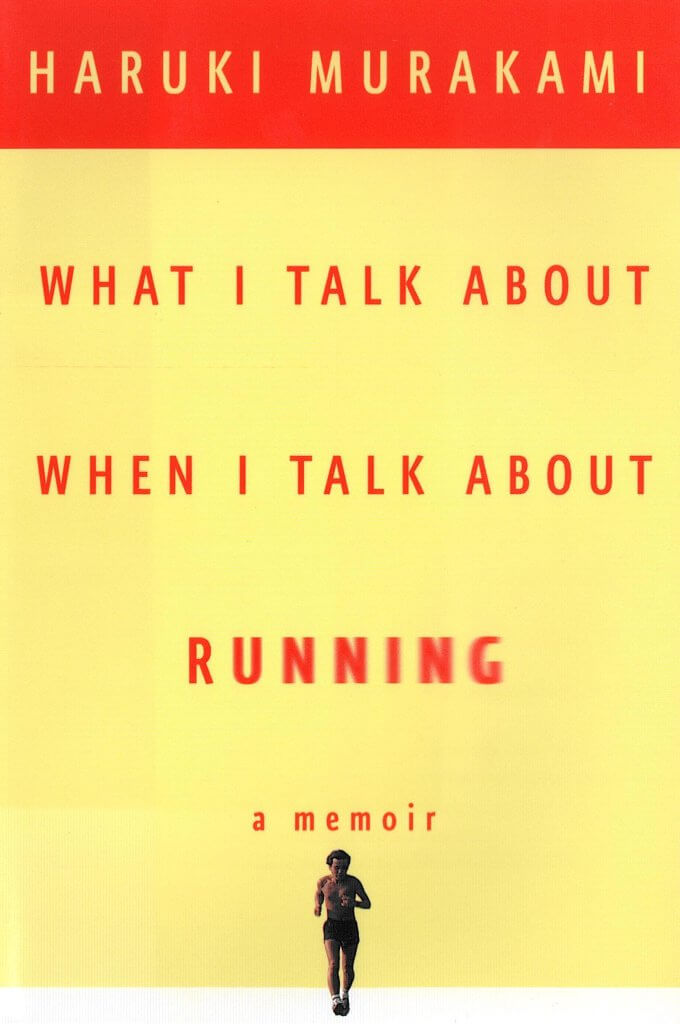
What I Talk About When I Talk About Running: Review and Lessons
For me, running is both exercise and a metaphor. Running day after day, piling up the races, bit by bit I raise the bar, and by clearing each level I elevate myself. At least that’s why I’ve put in the effort day after day: to raise my own level. I’m no great runner, by any means. I’m at an ordinary–or perhaps more like mediocre–level. But that’s not the point. The point is whether or not I improved over yesterday. In long-distance running the only opponent you have to beat is yourself, the way you used to be.
Murakami
On the surface, What I Talk About When I Talk About Running is a story about running and why this habit became such an important part of Murakami’s life. Through his memories, he tells the story of how he started running and how he managed to maintain this habit into old age.
I am not a runner, and although I tried a couple of times, running never stayed with me. Yet this book really showed me why people fall in love with running. As I was reading it, I even started wishing I were a runner too.
You also start to wonder whether his perseverance with running reflects a deeper personal trait, and whether that is one of the reasons he succeeded as an author.
We are all too lazy to move. It is far more comfortable to stay in bed in the morning. Yet this man gets up at five, writes uninterrupted, and then goes running.
And then we wonder why he is successful.
Who is the book for
This is a short book that can be read in a couple of days, or even in a single day.
Murakami’s language is very direct and simple. He tells the story as it is. It reminds me of Hemingway, that same straightforward, simple language that often carries a deeper meaning.
At first, I had no plans to write a post about this book. It is not the type of non-fiction I usually write about. But it stayed with me after I finished it.
And almost every day I find myself thinking about this book.
About the way he turned running into a force that feeds his writing habit.
A force that increases his confidence and physical fitness.
A force that teaches him to persevere and move forward no matter what happens.
I would say this book is for anyone who wants to understand human behavior and habits. For those interested in learning more about Murakami, or simply looking for a bit of running inspiration.
Or for anyone wondering what quiet persistence looks like in everyday life.
My main takeaways from What I talk about when I talk about running
A couple of things left a lasting impression on me.
His dedication to running
What struck me most was his dedication to running, even though he never won medals and was never among the best. He simply runs because he enjoys it, because he is always looking to better himself. The only competitor he sees is himself.
I often give up on an activity because I know I am not particularly good at it. And that feeling of not being good enough ruins the experience.
But this book reminds us to focus only on ourselves, not on measuring our progress against others. What matters is getting better little by little, even if that means we will never be among the best, or even close.
People sometimes sneer at those who run every day, claiming they’ll go to any length to live longer. But don’t think that’s the reason most people run. Most runners run not because they want to live longer, but because they want to live life to the fullest.
Openly talking about his failures
He sets his personal goals and works steadily toward achieving them. What I appreciated most is that he writes honestly about both his failures and his successes.
He does not try to present himself as exceptional. Instead, he openly reflects on the moments when things did not go as planned and how those experiences shaped his attitude toward running and life.
He also speaks very openly about aging and the difference it has made in his running achievements. Over time he becomes slower, his body changes, and some races become harder than they once were.
And yet he continues.
More than anything else, this is what I admire in this book: his lack of ego and his honesty in the way he looks at his own abilities and limitations. He accepts the reality of aging, but he keeps moving forward anyway.
His perseverance in both writing and running
In this book, Murakami describes many of his failures and mistakes. Yet none of them discouraged him from continuing to run.
Instead, he tries to understand what went wrong, learns from it, and moves on.
The same attitude seems to guide his writing as well. Day after day, he follows the same routine: waking up early, writing for hours, and then going for a run. It is not about sudden bursts of inspiration, but about consistency and doing the work.
If there is one thing that stands out in his story, it is this quiet perseverance. The willingness to keep going, even when progress is slow, mistakes happen, or the results are not extraordinary.
He simply continues.
Running as meditation
One of my favorite parts of the book was when Murakami explains how he feels while he is running. His thoughts, his state of mind, and what it feels like when he enters the state of flow where his mind is blank and his body has found a rhythm.
I just run. I run in a void. Or maybe I should put it the other way: I run in order to acquire a void. But as you might expect, an occasional thought will slip into this void. People’s minds can’t be a complete blank. Human beings’ emotions are not strong or consistent enough to sustain a vacuum. What I mean is, the kinds of thoughts and ideas that invade my emotions as I run remain subordinate to that void. Lacking content, they are just random thoughts that gather around that central void. The thoughts that occur to me while I’m running are like clouds in the sky. Clouds of all different sizes. They come and they go, while the sky remains the same sky as always. The clouds are mere guests in the sky that pass away and vanish, leaving behind the sky.
Most people will say that this state is the reason they love running. Their state of mind changes
Final thoughts
Most runners run not because they want to live longer, but because they want to live life to the fullest. If you’re going to while away the years, it’s far better to live them with clear goals and fully alive then in a fog, and I believe running helps you to do that. Exerting yourself to the fullest within your individual limits: that’s the essence of running, and a metaphor for life — and for me, for writing as whole.”
Murakami
I will be honest, when I finished the book I googled if Murakami was still running. And true enough I found that he was still running marathons.
Murakami does not make any claims about how running has completely transformed his life. What he does here is simply share his thoughts on running, and the profound impact it can have on a person without even realizing it.
Murakami’s dedication to running every day, just like his dedication to writing, comes from his belief that maintaining consistency in anything you do will lead to accomplishing the goals you are seeking.
I highly recommend reading this book, it can teach you a lot about perseverence, consistency and living life to the fullest.
Related posts
Review of Man’s Search for Meaning by Viktor Frankl