Building Habits: Key Lessons from Atomic Habits
“We are what we repeatedly do.”
James clear
Habits shape who we are.
They not only drive our daily actions but also reinforce our beliefs about ourselves.
A few months ago, I read Atomic Habits by James Clear, a book that taught me how to create and sustain new habits.
It didn’t initially blow my mind. The style of writing is simple, direct, and almost like a blog post.
But once I applied some of Clear’s suggestions, I noticed real, lasting changes in my routine.
In this post, I’ll share some powerful key lessons from Atomic Habits and how they’ve helped me overcome procrastination, self-doubt, and indecision.
What are Atomic Habits?
James Clear believes that building a lot of positive habits into your daily routine will, over time, transform your life. “Atomic” here means lots of small parts that add up to a powerful whole.
Atomic Habits breaks down the mechanics of habits in a super clear and straightforward way. If you are thinking about reading it, then you can have a look at the author’s blog and newsletter to see if his ideas and writing appeal to you.
Who is James Clear?
James Clear is a writer and a speaker. He’s been writing at jamesclear.com since 2012 about habits and continuous improvement. The blog was very popular, and in 2016, he published Atomic Habits.
While reading the book, you can feel that the writing style could be more refined. But that’s not why I read it. I read it because I wanted to quit some bad habits and finally introduce better ones into my daily life.
And for that, you don’t need an expert. What you need are clear, actionable ideas you can start using immediately.
My experience with Atomic Habits
I read this book for the first time in 2024. At first, I wasn’t impressed. The style felt repetitive, and I wasn’t sure it would offer anything new.
Still, a few ideas stayed with me. I began testing them slowly, introducing them into my daily routine in the next couple of months.
Over time, I started to understand why they work. And for the first time in my 40s, I managed to build a consistent exercise habit.
Once I understood how habits are formed, and, more importantly, how they’re maintained, I could apply the same approach to other areas of my life.
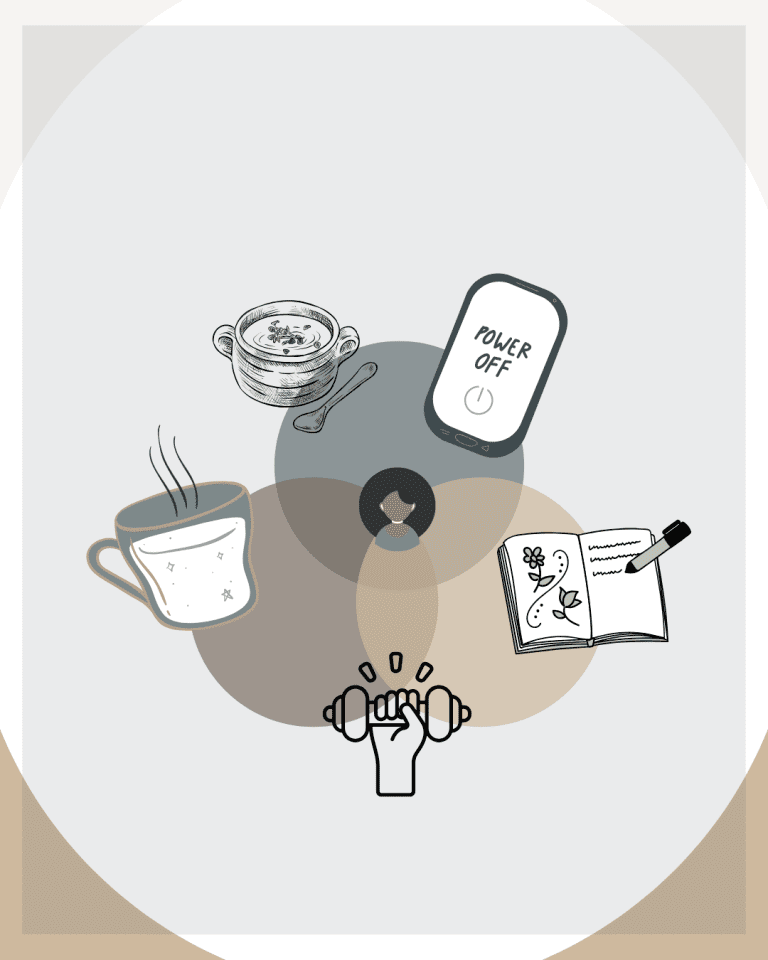
My breakfast. My skincare routine. My screen habits.
I do recommend this book, but only if you treat it like a workbook. It’s not something to read once and forget. You have to start implementing as you go.
Yes, the book has flaws. The writing style, the structure…
But it helped me solve one of the most persistent problems in my life: letting go of habits I’d carried for over 20 years and finally building the ones I’d been wanting for just as long.
Key Lessons from Atomic Habits
Change your mindset
Who do you want to be?
When you want to change yourself, the first thing you need to do is work on your mindset. You need to stop with the negative self-talk:
- “I am not a good runner.”
- “I look bad in gym clothes.”
- “I am not a good cook.”
- “I am lazy.”
So whether you want to be a writer, a developer, or a translator, the first step is the same: give yourself the name of your future self.
Get Specific with “When” and “How”
Once you know who you want to become, decide when and how you’ll take action. Be specific. Instead of saying, “I’ll write every day,” outline the details.
For example, “I will write every morning after breakfast for 30 minutes.” When you are specific, it helps you create a routine. Otherwise, you will spend all day waiting to start writing. And usually, it will never happen.
When I first decided to exercise, I kept putting it off because I hadn’t committed to a specific time.
I would just postpone it all day. Things changed once I decided, “I will exercise right after brushing my teeth, before breakfast”.
Habit stacking: link your new habits to existing ones
Habit stacking is a technique where you connect a new habit with an existing one. The existing habit serves as a trigger for the new one, creating a seamless flow.
For instance:
- After I exercise, then I’ll have my breakfast.
- After I do 10 pushups, then I’ll check Instagram.
For me, this meant I needed to create a morning routine. And find a firm place for my new habits.
So now I exercise right after brushing my teeth, and only then do I start with my breakfast and coffee.
Use visual triggers to support your goal

Small, visual cues in your environment can make a big difference in sticking to your habits. If you want to:
- Drink more water: Place water bottles around your home or workspace.
- Eat more fruit: Keep it visible in the kitchen.
- Exercise in the morning: Lay out your gym clothes the night before.
I implement this tip in several ways. I keep my morning pages journal on my desk, to remind me I need to start writing when I sit down with coffee.
I keep fruits in a bowl in the kitchen, so I can see them and remember to eat them during the day. Any sweets are hidden in the cupboard, away from my sight.
Small decisions matter
There are key moments in each day where one decision can set the tone for the rest.
For me, one of these moments is in the morning.
If I put on my gym clothes right away, I’m more likely to exercise.
If I eat a healthy breakfast, I’m more likely to make better food choices throughout the day.
Another crucial time is after work. Instead of collapsing in front of the TV or picking up my phone, I try to go for a walk. Or I start cleaning my apartment.
These small decisions add up, and day by day, you start to feel the benefits of such choices.
Start small and focus on consistency
This tip was crucial for me to finally introduce exercise into my daily routine.
Early in my fitness journey, I tried to work out for an hour three times a week and quickly burned out. Now, I do 15- to 20-minute daily sessions, which are much easier to maintain.
Starting with something small, like a 5-minute walk, is easy to do, and you are much more likely to stick with it.
Never skip twice
Missing your routine once doesn’t break a habit. It’s the second and third skip that usually does.
There’s no need to stress if you miss a day. Consistency matters, but so does intention. Try to return to your routine as soon as possible.
Once a habit is truly part of your life, it becomes surprisingly resilient. You don’t lose it easily.
I saw this myself recently when I had the flu. I didn’t exercise for an entire week. As soon as I felt better, I simply returned to it without resistance or drama.
This idea is especially helpful in the early stages, when you’re still forming the habit. Over time, it becomes ingrained enough that a trip, illness, or busy week won’t undo your progress. You just pick it back up and continue.
Keep track of your habits

Tracking your habits, even with a simple checklist or calendar, can be incredibly motivating.
I keep track of the habits I struggle with most, like drinking enough water and exercising daily. My tracker is a small list in my planner, and I just tick off things I accomplished that day.
This small list of daily habits helped me a lot in the beginning. I would see the reminder to drink more water, and get a glass right away.
Find support
Having a partner, friend, or family member who shares your goals or encourages you along the way can boost motivation.
For instance, I take walks with my husband after work. On days when I’m tempted to skip, he encourages me, and I do the same for him.
This, of course, can also be your friend, sister, or even a neighbor.
But even if you are alone, you can still do it. By using your journal and a tracker, you can remind yourself daily of what you want to accomplish.
Final thoughts
I rate self-help books based on what they help me achieve and change in my daily life.
Are the tips something I can implement right away? Do these tips bring me any results?
And even though I did not expect it at first, this book brought me some of the biggest benefits out of all the self-help books I have read so far. I highly recommend it to everyone who is looking to change daily habits and routines.
When I read it I used my reading journal and wrote down all the key lessons I want to remember and implement in my life. I highly recommend this practice, as it will help you retain much more from the book you read.