How to start a low buy year when you’re a chronic overspender
Over the years, I’ve read about the low buy year concept, and I’ve always wanted to try it. I would start, but then fail within a couple of weeks.
Habits are hard to break. I was used to scrolling through online shops like Mango or Zara daily and constantly searching for things to buy. It wasn’t occasional. It was a daily habit — browse, add to cart, buy. Repeat.
For me, most spending was on clothes and makeup.
A low buy year designed for a moderate spender doesn’t work for a chronic overspender. The rules are the same, but the psychology is completely different. This post is for the person who knows they overspend and wants to make it stick, finally.
If you’re new to the low buy year concept, start here first: How to Have a Successful Low Buy Year (Even If You’ve Failed Before).
Admit what kind of overspender you are
There are four types of overspenders:
- The reward spender — treats themselves constantly as motivation
- The boredom spender — shops when there is nothing to do
- The emotional spender — shops to feel better
- The social spender — keeps up with others, influenced by other people online and offline
I am a boredom spender. And sometimes an emotional one too.
I buy things because my job is unfulfilling. I click, assign, and mark projects as completed. Year after year. The work is shallow and uninspiring, and it is far more exciting to browse online stores and find something new to look forward to.
I am also an emotional spender. When I argue with my husband or the kids, I start looking for things to buy. My emotional spending really took off these last few years. And I had to fight hard to stop it.
Which type are you? Knowing this before you make any rules is the most important step. Rules that work for a boredom spender completely fail an emotional spender.
Don’t start with rules, start with awareness
The first step for me was becoming aware of the problem I had.
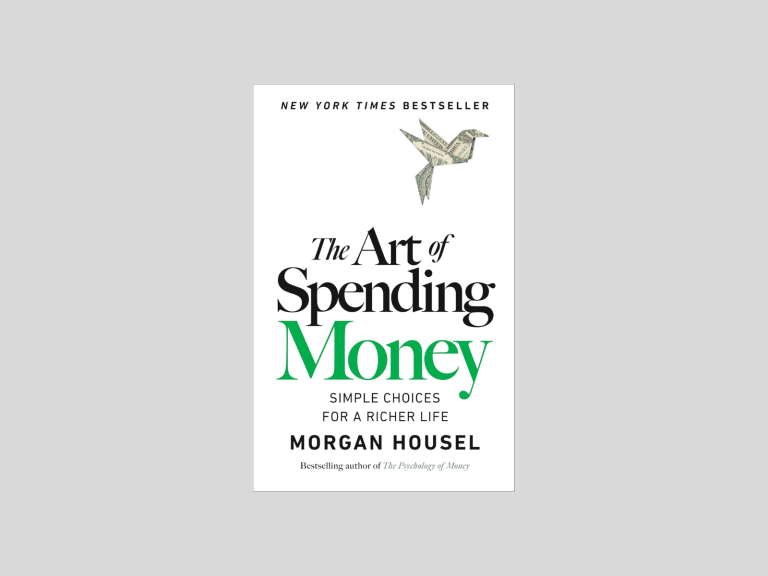
Two books helped me get there: The Psychology of Money by Morgan Housel and Ego is the Enemy by Ryan Holiday.
These books explained to me the mindset behind spending. Why I spend the way I do and how I should actually view money.
I recommend starting there before making any rules.
Most chronic overspenders fail a low buy year in the first month because they jump straight to restriction without understanding their patterns first. You cannot fix a habit you don’t fully understand yet.
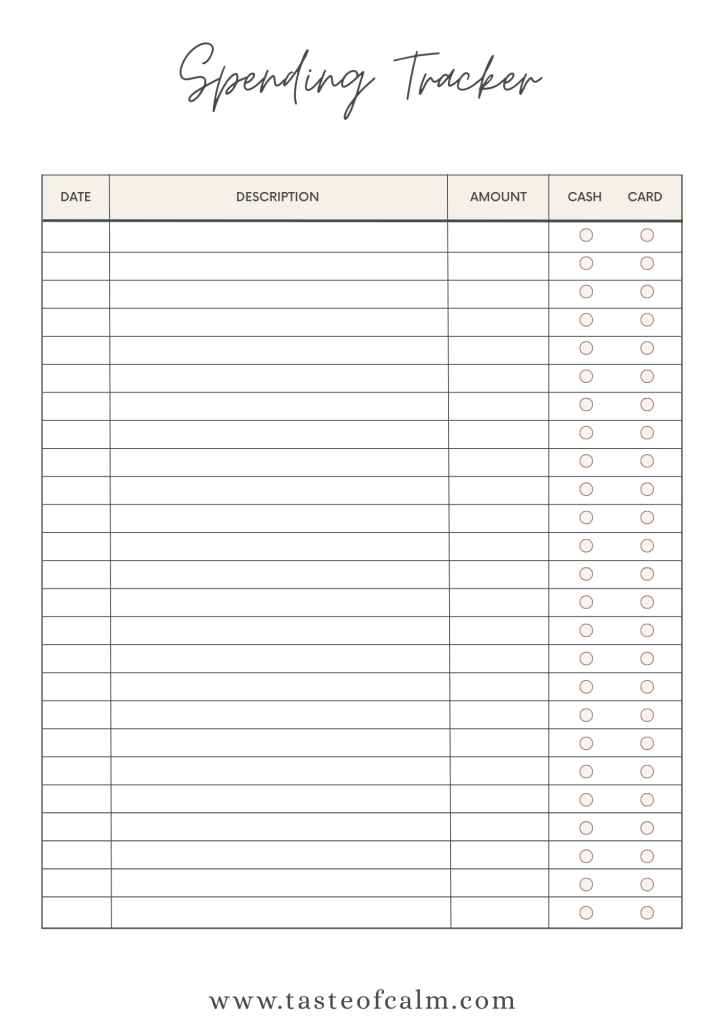
Spend the first two weeks just tracking — not judging, not restricting, just writing down every purchase and how you felt before and after. Bored? Stressed? Excited? Guilty? What you find will surprise you.
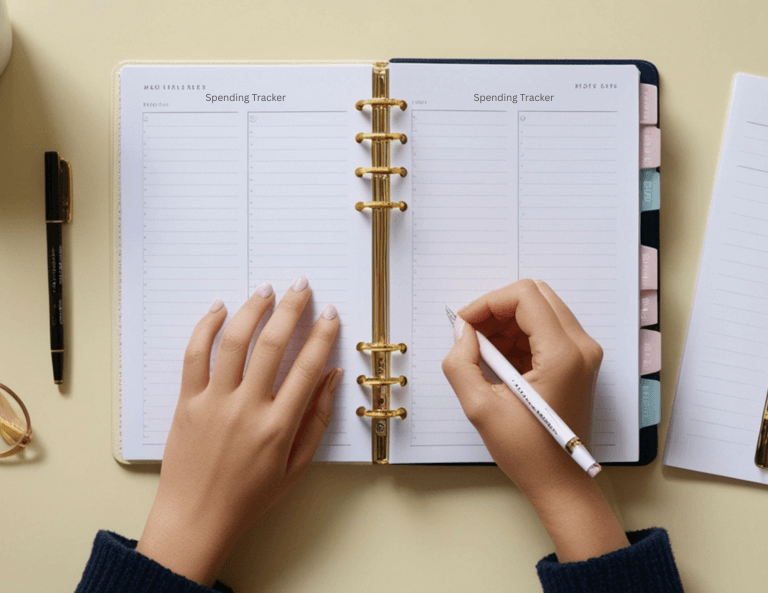
This is where a spending tracker becomes useful. Or you can just use an empty notebook and write down your purchases.
Make your rules around your specific weakness, not someone else’s
Generic low buy year rules (no clothes, no home décor, no eating out) are designed for the average person. If your weakness is online shopping at 10 pm when you’re tired, the rule isn’t “no online shopping”. It’s “no shopping after 9 pm.”
Specific rules beat broad rules every time because they target the actual behavior, not a category.
One of my rules is not to browse online shops while I work. I was treating boredom with shopping instead of finding something else to fill the gap.
Now I have this blog. When shallow work drains me, I write instead. I also keep a book open in my browser — if I feel the urge to browse Zara, I read a few pages instead.
Emotional spending is much harder to control. When I am upset, I don’t think about rules.
What worked for me was finding other ways to cope. A walk. A call with a friend. And one simple rule: never open a shopping app or browse shops when I am upset.
Think about your specific trigger moment: the time of day, the emotional state, the situation. Write one rule around that. Just one.
Start with a low buy month, not a low buy year
Starting small matters more than you’d think. It removes the weight of the decision, and you are more likely to start and follow through.
I learned this from the book Atomic Habits by James Clear.
Instead of immediately deciding that you are going to do a low buy year, start with a low buy week, then turn this week into a month, and slowly increase your goal.
The key is not to overwhelm yourself and make the new habit as easy as possible at first.
Replace the habit, don’t just remove it
Overspending is usually filling a gap — boredom, stress, loneliness. Remove the habit without replacing it, and the urge just comes back.
So have one specific answer ready. When you feel the pull, what will you turn to instead?
For me, it’s writing this blog. I started it as an escape from the repetitive tasks at work so instead of scrolling, I open a draft and start writing.
If you’re looking for ideas, here are 10 Things to Do Instead of Checking Your Phone.
Plan for the inevitable slip
You will slip. It’s not pessimism, it’s reality for anyone who has a long history of overspending.
The difference between people who complete a low buy year and people who quit in February is not willpower. It’s what they do after a slip.
Decide in advance: one unplanned purchase doesn’t end the experiment. Write that down somewhere visible.
Your first goal is just to get better, not perfect. I sometimes find that writing this down in my journal and seeing it daily helps me stay optimistic and persistent.
What I did differently this time
I started slow. I didn’t write a list of rules I need to follow. I picked up my spending tracker and started logging all the purchases I was making.
Seeing them all together on a piece of paper was very scary, but also motivating. I decided at that moment that I really needed to reduce my spending.
The key here is “reduce,” not completely “stop” this type of spending. I learned a long time ago that I need to start small.
Saving even $20 this month is enough to start.
But working on my mindset and understanding why I spend the way I do is what actually made the difference.
People think that spending money is about self-control, but it is often about your mindset and the way you value things.
So my biggest advice is to start working on yourself. Start reading about the reasons why you spend the way you do, and make your goal small and achievable at first.
Frequently Asked Questions
A no-spend year restricts all non-essential purchases: you only spend on food, bills, and basic necessities. A low buy year is more flexible. For chronic overspenders, a low buy year is a more realistic and sustainable choice.
Start by tracking your spending for 1 month without any restrictions. Just observe. Then write one specific rule around your biggest weakness. For example, no browsing online shops during work.
Have one specific replacement ready before you start your low buy year. Not a list of options, one thing you will actually do in that moment. For me, it’s writing or reading a few pages of a book. For you, it might be a walk, a phone call, or journaling.
Decide in advance that one unplanned purchase does not end the experiment. Write that down somewhere visible before you start. Your goal is to improve, not to be perfect.
There is no universal answer, but research on habit change suggests 60 to 90 days to form a new default behavior, longer for deeply ingrained habits like daily online browsing. The first month is the hardest. If you get through month one without quitting, the second month becomes significantly easier.
Daily shoppers need to start smaller, with a low buy month instead of a full year commitment, and with rules built specifically around their trigger moments. The goal in the first month is not perfect spending. It is just becoming aware of the pattern.
Final thoughts
A low buy year is not about restriction; it is about finally understanding why you spend.
Once you answer that question, the rules almost write themselves.
Gaining control over your money will give you a new type of freedom you haven’t experienced before. And you will value that freedom much more than the new dress in your wardrobe.
Related posts
Finally stop emotional spending
How to Have a Successful Low Buy Year (Even If You’ve Failed Before)