How ego affects your spending, habits, and happiness
Your potential, the absolute best you’re capable of—that’s the metric to measure yourself against.
Ryan Holiday
Since my teenage years, I’ve been self-conscious and tried to impress others: with my clothes, my makeup, even the way I behaved. I felt the constant pressure to be more, have more, know more.
When I got my first smartphone, things got worse. I could now see daily how people lived. The beautiful houses they owned, the travel, the clothes, the beauty of their bodies and faces.
That took away the satisfaction I felt with my own life. Nothing was enough.
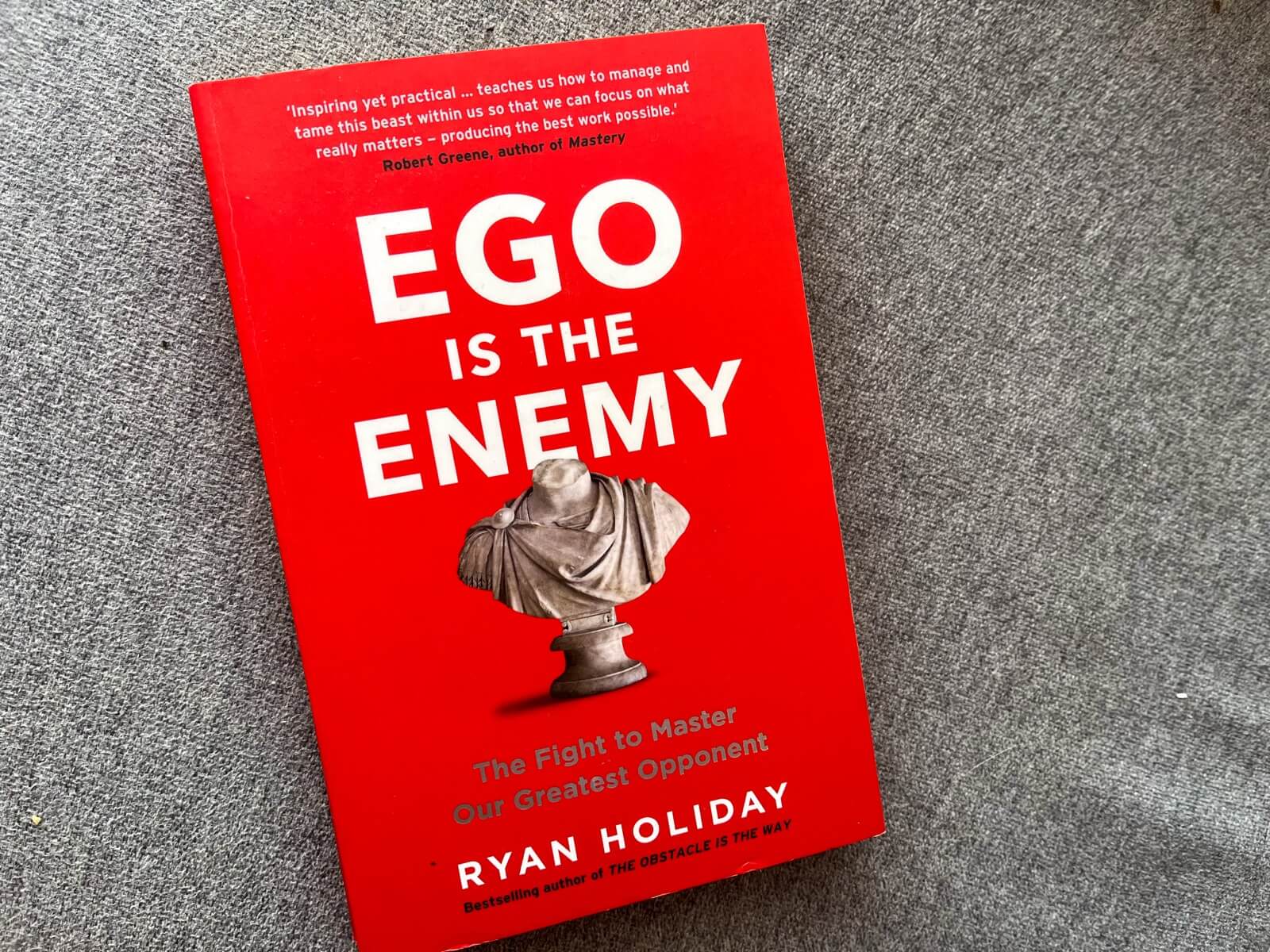
Then, recently, I read Ego is the Enemy by Ryan Holiday, and I realized something.
All of this pressure does not come from the outside world.
It comes from within, and it is our ego.
What ego really looks like in everyday life
Ego is an unhealthy belief in our own importance. Arrogance. Self-centered ambition. The need to be better than, more than, recognized for – that’s the ego. Ego is the enemy of what you want and what you have.
The ego is at the root of many of our problems, but we rarely see it clearly.
Instead, we tend to blame other people or our circumstances. We tell ourselves that the situation is wrong or that someone else is responsible, without realizing that the real obstacle is within us.
The ego shows up in subtle ways.
It’s the need to show off your successes and hide your failures, the need always to be right, and the belief that you already know enough. At first, these seem harmless, but they stop you from learning, accepting feedback, and truly listening.
Today, it’s easier than ever to feed the ego.
We share our achievements online, present a polished version of our lives, and wait for validation through comments and likes.
The more we chase that validation, the less satisfied we feel.
It makes you compare yourself to others
We are rarely satisfied with what we have. Instead, we start wanting what others have, and often even more than that.
Over time, we lose sight of our own priorities, our values, and the goals that actually matter to us.
We end up spending time and energy on things we don’t even enjoy, trying to prove ourselves to people we don’t truly respect, just to achieve things we never wanted in the first place.
Ego feeds this cycle.
It leads to envy, and without noticing it, we start speeding up, trying to keep up with others and their pace of life.
At some point, it becomes exhausting.
That’s why it’s important to sit down and ask yourself a simple question:
What actually matters to me?
It affects how you spend money
Think about how many times you bought something just because you saw someone else look great in it.
An influencer online. A friend. Someone you follow. And suddenly, you felt like you had to have it too.
A lot of our financial decisions are not really about need or value. They are shaped by what other people think and the admiration we hope to receive.
We are feeding our ego.
And at the same time, we are sacrificing something much more valuable: our time.
Every single thing you buy is paid for with your time. So when you decide to buy something expensive, like a new watch, it’s worth asking yourself:
Is this worth the time I spent earning it?
It stops you from building good habits

Ego doesn’t just affect how you think; it directly shapes your actions when you’re trying to build new habits.
When you start something new, whether it’s exercising, journaling, or improving your morning routine, you expect to see results quickly. You want to see progress right away, and when that doesn’t happen, it becomes frustrating.
Instead of staying consistent, you start questioning yourself.
And that’s where ego steps in.
It doesn’t like starting small or progressing slowly. It wants visible results, a quick win, and recognition. When those things don’t come fast enough, it convinces you that your effort isn’t worth it.
I tried to start regular exercise for years. Yet I always failed after a few weeks or months.
I changed when I became aware of my mindset, when I realized that most habits are built through small repeated actions. And that I need to ignore that voice in my head that tells me I am failing.
And that’s when habits start to stick.
It keeps you stressed
Ego doesn’t just influence your actions or decisions—it shapes how you feel on a daily basis.
When your sense of worth is tied to what you achieve, how you appear to others, or how you compare to the people around you, it creates constant pressure.
Even when things are going well, it doesn’t feel like enough.
You might reach a goal, buy something you wanted, or improve a part of your routine, but the satisfaction doesn’t last. Very quickly, your attention shifts to the next thing, the next level, the next thing you need.
And that creates a cycle that is hard to step out of.
Ego keeps you focused on what’s missing instead of what’s already there. It pushes you to move faster, do more, and expect more from yourself, even when you’re already overwhelmed.
You feel like you’re always behind, always catching up, always trying to prove something—whether to others or to yourself.
The more you try to keep up, the more exhausted you become.
For me, the wake-up call came with my illness when I realized that I had lost focus on the most important aspects of my life while trying to keep up with others.
It became clear that I need to reevaluate what I find important, step back from the constant race of “needing more,” and find balance in my life again.
Final thoughts
Ego is not something you can completely remove from your life, and it’s not something you need to fight every day.
But it is something you can become aware of.
Once you start noticing it, in your thoughts, your decisions, and the way you compare yourself to others, it becomes easier to step back and question it.
When I read Ego Is the Enemy, I realized how much I would have benefited from it at certain points in my life. Like many people, I was trying to “have it all,” without ever stopping to ask myself a few simple questions:
Who do I want to be?
What actually matters to me?
What path do I want to take?
Instead, I followed the expected path. I accumulated things I didn’t need and sacrificed my time and health for material possessions that, in the end, didn’t truly matter to me.
You don’t need to keep up with other people’s pace, their choices, or their version of success. Keep that in mind the next time you’re making decisions that affect your well-being and your finances.
You must practice seeing yourself with a little distance, cultivating the ability to get out of your own head. Detachment is a sort of natural ego antidote. It’s easy to be emotionally invested and infatuated with your own work. Any and every narcissist can do that. What is rare is not raw talent, skill, or even confidence, but humility, diligence, and self-awareness.
Related posts
Building Habits: Key Lessons from Atomic Habits
How to save money: simple habits that work
Ego is the Enemy by Ryan Holiday — Book Review and Key Takeaways