On Writing by Stephen King — Book Review and Key Takeaways
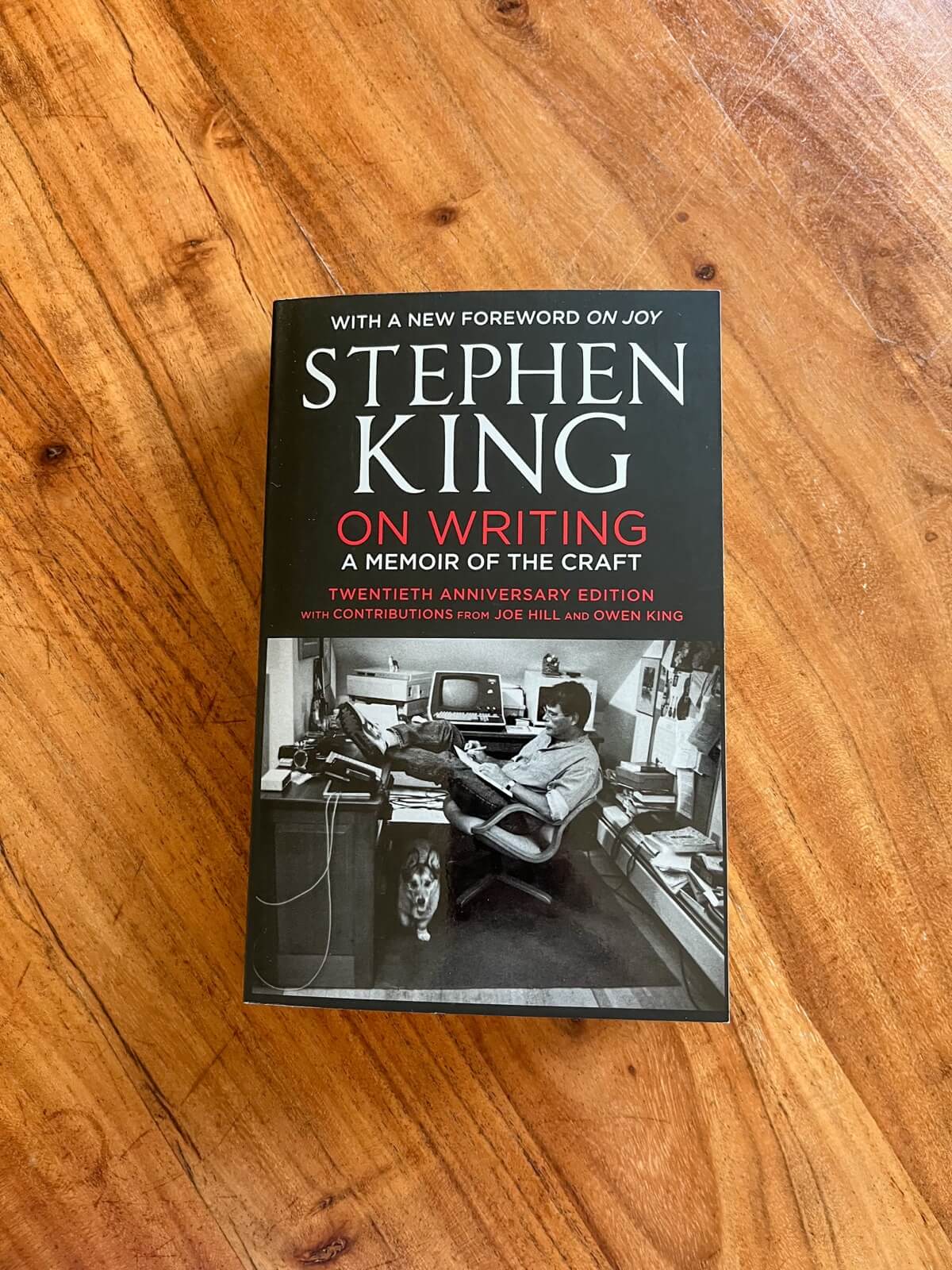
On Writing by Stephen King is part memoir, part writing guide and one of the better books I’ve read on the craft.
I’m not a Stephen King fan. I’ve read a couple of his books (IT among them), but horror isn’t really my thing. Still, I kept seeing it praised online. So when I spotted it in a bookshop while visiting my sister in Germany, I picked it up.
King’s writing style is direct and engaging, and I couldn’t put this book down. It’s non-fiction, but it reads like a novel. I finished it in a couple of days.
Quick verdict:
If you write anything regularly (fiction, your journal, or even blog posts), there’s something here. I especially like the part explaining his daily writing habit and his direct and honest approach to writing. Skip it if you want a step-by-step writing course; the book focuses more on mindset and habits than instruction.
My rating: 4.5/5 — worth reading even if, like me, Stephen King isn’t your usual author.
What makes a great writer
It was an eye-opening experience to read about the beginnings of Stephen King. The way he grew up, started writing as a kid, and kept going through rejection and setbacks. There is so much more in his story than the usual writing tips found in similar books.
You get to see how he started writing, what his first works looked like (a copied comic), and how he built his skills through persistence and constant practice.
There are many funny stories in the book as well. The trouble he got into writing about his teachers and giving them unflattering nicknames. The first part of the book is my favorite part, but the actual writing tips start in the second part of the book.
Here are some general writing tips he shares:
Stop watching TV, read as much as possible
If you want to be a writer, you must do two things above all others: read a lot and write a lot...Every book you pick up has its own lesson or lessons, and quite often the bad books have more to teach than the good ones.
According to King, your TV should be the first thing to go, and now that includes your phone along with social media clips and posts.
Take your book everywhere. To your doctor’s appointment, when you are eating, walking, or waiting. He points out that even reading bad books has a lot of value.
You imitate what you like, but you also see what you don’t like and want to avoid in your own writing.
Write every day
It’s important to write every day, not wait for an inspiration to strike. King writes around 2000 words per day or around 10 pages and when he is working on a book, he writes every single day.
I found a similar advice in Murakami’s running memoir. Murakami has a very strict daily routine. He gets up early at 4 or 5 am, writes for 4 hours, and then goes running.
So from both writers we can learn that to become a good writer you need to write every single day. And the best way to do that is by creating a strict morning routine.
King further suggests writers should have their own working space, where they have no distractions.
But you need the room, you need the door, and you need the determination to shut the door. You need a concrete goal as well…Don’t wait for the muse.
Tell the truth
What are you going to write about? And the equally big answer: Anything you damn well want. Anything at all…as long as you tell the truth.
The key to good writing is to be honest, and write about what you like and know. Then make it your own by blending in your experience, personal knowledge of life, love, friendships, or work.
Have someone to believe in you
Writing is a lonely job. Having someone who believes in you, makes all the difference.
For Stephen King, that someone was his wife Tabby. She supported him even when he continued writing after his regular job and never once voiced a complaint. Her support was constant.
King’s practical writing advice
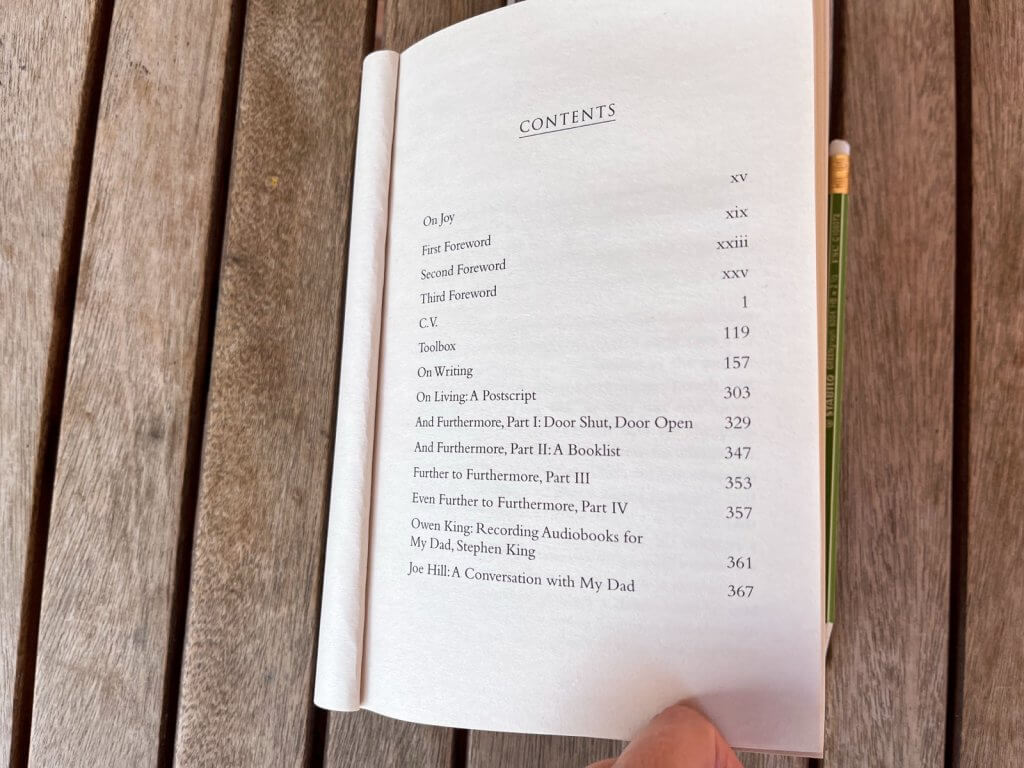
The second half of the book is more practical, King calls it the “toolbox.” I will not write a lot about that part of the book but some main tips are:
- your vocabulary should consist of the words you actually use
- avoid passive voice (The meeting will be held at 7pm)
- cut adverbs (He closed the door firmly)
For King, the fear is the root of all bad writing. Fear that the reader will not understand you and that you need to be specific and clear.
What surprised me
I expected a book full of writing tips but instead I got a book about life, daily routines, and the fundamentals of good writing that everyone should know.
I also didn’t expect to enjoy his personal stories as much as I did. The funny stories from his childhood, his first rejections, the part about his wife Tabitha finding the first pages of Carrie in the bin and fishing them out. All these stories give this book a lot of charm and make it a great read.
Who should read this
Anyone who writes regularly, not just novelists. I am not a writer myself, and the only writing I do is on this blog and in my journals.
If you write blog posts, newsletters, scripts, or even just long emails, there’s something in here for you. I suggest writing down the most important parts of this book and the tips he shares (for that I use my reading journal).
What I’m taking away
I have spent a good many years since―too many, I think―being ashamed about what I write. I think I was forty before I realized that almost every writer of fiction or poetry who has ever published a line has been accused by someone of wasting his or her God-given talent. If you write (or paint or dance or sculpt or sing, I suppose), someone will try to make you feel lousy about it, that’s all.’
When I read the paragraph above I paused. And realized he was right. Whatever anyone tried to do or create, someone will tell you you are not good enough. Your work is bad, you should just quit.
I had the same experience several times in my life. And now I realize, I was not alone. That experience is shared by many people and by Stephen King himself.
The second thing I keep coming back to is his daily writing habit. I realize even more now, that how you create your daily routine will shape the way you live your life.
If you haven’t read On Writing, I highly recommend it. You can find it on Goodreads if you want to read more reviews first. If it sparks something creatively, The Artist’s Way by Julia Cameron is worth reading next.
FAQ
On Writing is part memoir, part writing guide. King shares stories from his early life and his rejection-filled start as a writer, then moves into practical advice on vocabulary, grammar, and his own writing process.
Yes. The core advice, read constantly, write daily, and cut what doesn’t earn its place, applies just as well to blog posts, journaling, and emails as it does to novels.
It’s a quick read, I finished it in about two days, and it moves faster than most non-fiction because of King’s storytelling style.
He writes 2,000 words a day, every day, including holidays. The point isn’t the number, it’s treating writing as consistent work rather than something you wait to feel inspired to do.
No. I’m not a horror fan and haven’t read most of his novels, but I still got a lot out of this one. It’s really a book about the craft of writing, not about his fiction specifically.