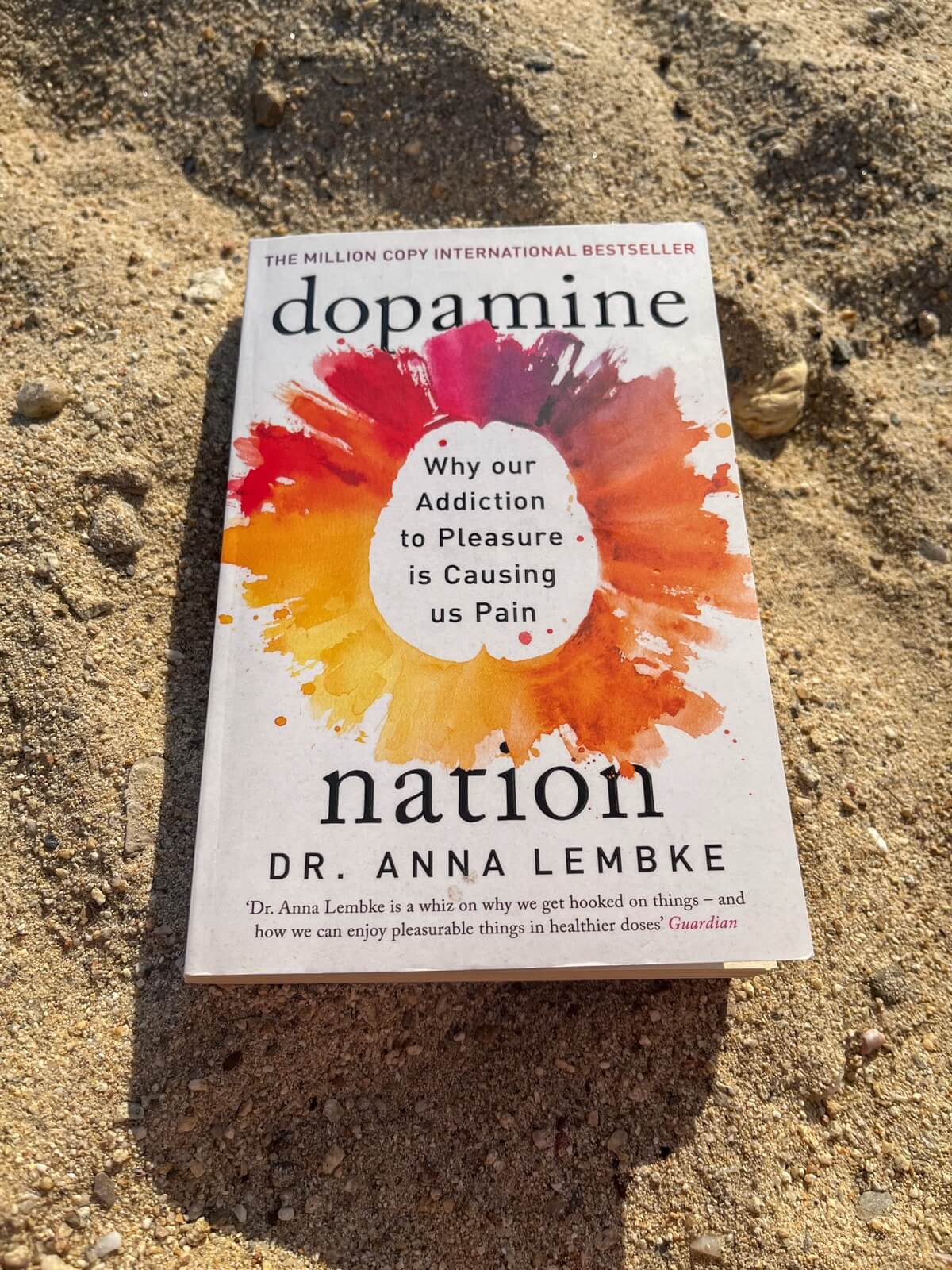
Dopamine Nation by Anna Lembke — Honest Review and Key Takeaways
“We’re all running from pain. Some of us take pills. Some of us couch surf while binge-watching Netflix. Some of us read romance novels. We’ll do almost anything to distract ourselves from ourselves. Yet all this trying to insulate ourselves from pain seems only to have made our pain worse.”
I started reading this book on my Greek holiday.
I thought this was the perfect way to reduce my screen time and stop my phone addiction. But I was wrong. This is not a simple “cut your screen time” story. It’s rather a compilation of stories from the patients Dr. Anna Lembke treated and the way these cases helped her understand how addiction and dopamine work.
I found the cases intriguing and sometimes shocking (the case of a sex addict!) and I especially enjoyed the personal stories Lembke shared about her own addictions and bad habits. While not as serious as her patients’ stories, it gave this book a personal angle I really enjoyed and made it much more relatable.
Now, if you don’t enjoy reading about science and the mind, then you might not enjoy this book.
I kept expecting Lembke to switch to modern-day addiction problems with screens but that never happened. So if you are picking this book for this reason, don’t — you will be disappointed.
There are two key points that really stayed with me.
Radical honesty
I particularly liked the chapter about Radical Honesty: the importance of telling the truth to the people around us.
On one hand, it makes us aware of our actions. And on the other, it fosters intimate human connections. Telling the truth heals relationships and helps you face your problems.
Have you ever tried talking to someone who keeps lying that nothing happened, even though you saw it with your own eyes? Lying makes you stop any conversation with that person.
But imagine if that person told the truth, explained why, apologized, and took responsibility for their actions.
The knowledge that you can always talk to someone and they will tell you the truth is the basis of any good relationship. This goes for parents and kids, and for spouses.
Distracting ourselves leads to anxiety and depression
Later in the book, Lembke shares an anonymous story of a young patient experiencing anxiety and depression. After hearing her story, Lembke suspects the patient is distracting herself with devices and gives her advice that we all should follow:
I suggested she try walking to class without listening to anything and just letting her own thoughts bubble to the surface. She looked at me both incredulous and afraid. “Why would I do that?” she asked, openmouthed. “Well,” I ventured, “it’s a way of becoming familiar with yourself. Of letting your experience unfold without trying to control it or run away from it. All that distracting yourself with devices may be contributing to your depression and anxiety. It’s pretty exhausting avoiding yourself all the time. I wonder if experiencing yourself in a different way might give you access to new thoughts and feelings, and help you feel more connected to yourself, to others, and to the world.”
Lembke then mentions the importance of boredom, which is completely lost in today’s society. When was the last time we just sat on the balcony and watched the street? Or let ourselves hear no noise at all from TV, podcasts, or our phones?
She thought about that for a moment. “But it’s so boring,” she said. “Yes, that’s true,” I said. “Boredom is not just boring. It can also be terrifying. It forces us to come face-to-face with bigger questions of meaning and purpose. But boredom is also an opportunity for discovery and invention. It creates the space necessary for a new thought to form, without which we’re endlessly reacting to stimuli around us, rather than allowing ourselves to be within our lived experience.”
Final thoughts
The book may not have been what I expected, but it was a highly interesting read that gave me an important insight into modern-day feelings of anxiety and depression.
Her tips on how to stop bad habits and embrace boredom are very useful. I stopped listening to podcasts while cleaning, or cooking. I removed my earphones for the first time and was surprised to find how much calmer I felt.
All this noise from devices that we hear all the time is affecting the way we feel and think. And often times, instead of reaching for medication, we need to review the way we live and our daily habits.
The key is often right there.
Related posts
Review of Man’s Search for Meaning by Viktor Frankl
The Mountain Is You by Brianna Wiest — Honest Review and Key Takeaways